Tuesday, 03 Mar. 2026
Prof. Gabriella Pasi

Course title: Context and Knowledge Awareness in Large Language Models
Abstract
Large Language Models (LLMs) encode vast amounts of knowledge in their parameters; however, their internal knowledge is static, difficult to interpret, and not always reliable. This lecture provides an overview of existing and emerging techniques for extending, enriching, and controlling knowledge and context awareness in LLMs. Different categories of approaches will be discussed, highlighting their underlying mechanisms, strengths, and limitations. The lecture concludes by identifying open research challenges and outlining promising directions for more robust and controllable knowledge awareness.
Short bio
Gabriella Pasi is Full Professor at the University of Milano-Bicocca, Department of Informatics, Systems, and Communication, where she leads the Information and Knowledge Representation, Retrieval, and Reasoning (IKR3) Laboratory. Her research focuses on Natural Language Processing (NLP) and Information Retrieval; recent research activities address efficient language modeling, personal and context-aware Large and Small Language Models, and online disinformation. She received the 2023 Outstanding Research Contributions Award from the Web Intelligence Consortium. She has served as Program Chair and General Co-Chair of leading international conferences and is an Associate Editor of several international journals. She is a Fellow of the European Laboratory for Learning and Intelligent Systems (ELLIS), the Web Intelligence Academy, the Asia-Pacific Artificial Intelligence Association (AAIA), and the International Fuzzy Systems Association (IFSA).
Dr. Kleanthis Malialis

Course title: Learning from Nonstationary Data Streams
Abstract
Modern real-world systems increasingly operate in streaming environments where data arrive continuously, potentially without end, and under strict memory constraints. Unlike traditional batch learning, data stream mining requires online, incremental processing while coping with evolving data distributions. A central challenge in such environments is concept drift, i.e., changes in the data generating process over time, which can render predictive models obsolete if not properly addressed.
This lecture presents fundamental principles and practical approaches for learning from nonstationary data streams. We discuss drift characteristics and adaptation strategies, including incremental learning and drift detection methods. Particular emphasis is placed on the challenge of limited label availability in streaming settings, where annotation is often costly. In this context, active learning and unsupervised learning provide principled mechanisms for reducing labelling effort while maintaining adaptive performance. We further present memory-based and similarity-driven active stream learning approaches, including methods built upon Siamese neural networks for few-shot and imbalanced scenarios.
Short bio
Kleanthis Malialis is a Senior Research Associate at the KIOS Research and Innovation Center of Excellence at the University of Cyprus. His research interests focus on learning from nonstationary, limited-labelled, and imbalanced data streams, with applications in monitoring of critical infrastructures and health informatics. He currently serves as an Associate Editor for the journal Neurocomputing and has been involved in and secured funding from various European and national research projects.
In 2019, he was awarded a Marie Skłodowska-Curie Fellowship. He has also been a visiting researcher at the Polytechnic University of Milan (POLIMI) and previously worked as a postdoctoral researcher in the Department of Computer Science at University College London (UCL). Earlier in his career, he held Data Scientist roles in industry in London.
He holds a PhD degree (2015) in Computer Science from the University of York, UK, with research on multi-agent learning and coordination with applications in network intrusion detection and response. He also holds an MEng degree in Computer Systems and Software Engineering (2010) from the University of York.
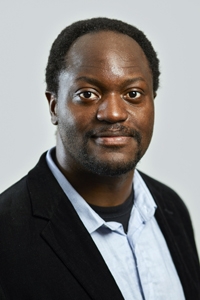
Prof. Axel-Cyrille Ngonga Ngomo
Course title: Recent Advances in Concept Learning
Abstract
Concept learning exploits background knowledge in description logics to learn concepts in a supervised fashion. Classical approaches to concept learning fail to address the idiosyncrasies of modern knowledge graphs (including scale, inconsistency and incompleteness). In this talk, we begin by presenting concept learning formally. We then delve into recent solutions to concept learning that address the limitations aforementioned while preserving some of the guarantees of classical approaches. Finally, we discuss some open challenges that are yet to be addressed.
Short bio
Axel Ngonga is one of the world’s leading researchers in neuro-symbolic AI. The core of his research lies at the intersection of knowledge graphs, formal semantics and explainable machine learning. He has made several fundamental contributions to the field of concept learning, including the first neuro-symbolic approach for concept learning based on reinforcement learning and Neural Concept Synthesizers, the first family of neuro-symbolic translation-based concept learners with constant time complexity. His works at the interface between symbolic and subsymbolic learning also include Clifford Embeddings, a unification theory for multiplicative embedding approaches. These contributions are implemented in open-source software frameworks with permissive licenses that have already achieve worldwide adoption with over 130,000+ downloads.
Dr. Anastasia Constantinou

Course title: Introduction to Intellectual Property Rights & Knowledge Transfer
Abstract
This session will discuss the importance of intellectual property rights as assets for an organisation, the various types of intellectual property rights, why it is important to commercialise Intellectual property rights stemming from Research, the various modes of valorisation of research results and the associated commercialisation channels and finally a few words on Knowledge transfer in UCY.
Short bio
Anastasia is a Senior Officer and the Head of the Innovation Management Sector at the Research and Innovation Support Service of the University of Cyprus, dealing with the protection and management of the intellectual property rights, the knowledge transfer and research valorisation activities and the research and innovation contracts of the University.
She combines academic, industrial, business and consulting background in Innovation, Entrepreneurship and Research for more than 30 years having lived and worked in three countries, UK, Greece and Cyprus. She actively supports the development of the entrepreneurship ecosystem in Cyprus, having co-founded the IDEA Business Centre, one of the first such structures in Cyprus in 2014 and being a member of its founding Board of Directors.
Anastasia regularly provides mentoring to Cyprus based start-ups and spin-offs and delivers training and presentations on topics related to her expertise. She is also the main inventor of an international industrial patent. Since March 2019 she has been an evaluator for the European Commission for the EIC Accelerator programme.
Anastasia is a Registered Technology transfer Professional (RTTP) since 2024 and the winner of the Madame Figaro Woman of the Year award 2021 in Cyprus in the category “Innovation”. In 2019 she was selected to participate in a three-week International Visitor Leadership (IVLP) Program by the U.S. Department of State entitled ‘Entrepreneurship as the Engine of Prosperity and Stability – Strategic Innovation’ in the US.
She holds a BSc in Metallurgy from the University of Manchester, UK, an MSc in Materials Research and a PhD in Materials Engineering from Imperial College London, UK and an MBA (Entrepreneurship) from CIIM, Cyprus.
Wednesday, 04 Mar. 2026
Prof. Constantine Dovrolis

Course title: Recent Mathematical Results about Deep Neural Networks
Abstract
Over the last decade, deep learning has evolved from being an enigmatic “black box” to a field where mathematics provide clear insights into its remarkable success. In this lecture, we will explore how modern analysis has shed light on key questions, including:
1. Why overparameterized neural networks generalize well (despite earlier results from classical learning theory).
2. The critical role of depth in the neural network architecture.
3. How deep learning avoids the curse of dimensionality.
4. The surprising efficiency of optimization methods despite the non-convex nature of the problem.
Short bio
Prof. Constantine Dovrolis is the Director of the center for Computational Science and Technology (CaSToRC) at The Cyprus Institute (CyI) as of 1/1/2023. He is also an Adjunct Professor at the School of Computer Science at the Georgia Institute of Technology. During the last 10 years, he has been mostly focusing on neuro-inspired machine learning and network neuroscience. According to Google Scholar, his publications have received more than 15,000 citations with an h-index of 56. His research has been sponsored by US agencies such as NSF, NIH, DOE, DARPA, and by companies such as Google, Microsoft and Cisco. He has published at diverse peer-reviewed conference and journals such as NeurIPS, the International Conference on Machine Learning (ICML), the ACM SIGKDD conference, PLOS Computational Biology, Network Neuroscience, Climate Dynamics, the Journal of Computational Social Networks, and others.
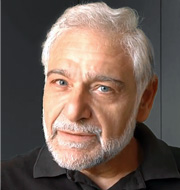
Prof. Sergios Theodoridis
Course title: Self-Supervised Learning: A Tour to the Basics
Abstract
Yann LeCun has said that self-supervised learning is the “dark matter of intelligence”. Self-supervised learning is not new. However, over the recent years, especially after the advent of transformers and large language models, it is receiving a strong revived interest. Self-supervised learning (SSL) is being used in a wide range of modalities, from computer vision, video processing and learning, speech and audio processing, to name but a few typical applications.
In this talk, self-supervised learning is presented in a systematic way, starting from the basic building ideas and definitions. Where SSL stands compared to unsupervised and supervised learning? In the sequel, the more recent trends in SSL methods will be presented, including prediction techniques, masked prediction methods, contrastive learning SSL and, finally, self-distillation techniques. Some recently proposed and well known schemes such as SimCLR, BYOL and Barlow Twins, will be discussed in more detail.
Short bio
Sergios Theodoridis is Professor Emeritus with the Department of Informatics and Telecommunications of the National and Kapodistrian University of Athens, Greece. He is Director of Education HERON – Center of Excellence in Robotics and AI, Greece. He also serves as a member of the Board of Governors of the National and Technical University of Athens.
He is the author of the book “Machine Learning: From the Classics to Deep Networks, Transformers and Diffusion Models”, Academic Press, 3rd Ed., 2025, the co-author of the best-selling book “Pattern Recognition”, Academic Press, 4th Ed. 2009, the co-author of the book “Introduction to Pattern Recognition: A MATLAB Approach”, Academic Press, 2010. His books have been translated into the Chinese, Japanese, Korean and Greek languages.
He is the co-author of seven papers that have received Best Paper Awards including the 2014 IEEE Signal Processing Magazine Best Paper Award and the 2009 IEEE Computational Intelligence Society Transactions on Neural Networks Outstanding Paper Award.
He has received an honorary doctorate degree (D.Sc) from the University of Edinburgh, UK, in 2023. He is the recipient of the 2021 IEEE SP Society (SPS) Norbert Wiener Award, the 2017 EURASIP Athanasios Papoulis Award, the 2014 IEEE SPS Carl Friedrich Gauss Education Award and the 2014 EURASIP Meritorious Service Award. He has served as a Distinguished Lecturer for the IEEE SP as well as the Circuits and Systems societies.
He has served as Vice President IEEE Signal Processing Society, as President of the European Association for Signal Processing (EURASIP), as a member of the Board of Governors of the IEEE Circuits and Systems (CAS) Society, and as the chair of the IEEE SPS Awards board.
He is Fellow of IET, a Corresponding Fellow of the Royal Society of Edinburgh (RSE), a Fellow of EURASIP and a Life Fellow of IEEE.
Dr. Eugene Sweeney

Course title: Research Proposal Preparation
Abstract
A researcher’s success is largely measured by publishing papers in high impact journals. However, before any papers can be written, research proposals need to be submitted to secure the funding to do the research. This presentation will highlight some key general points and tactical tips, which should be considered in order to write winning proposals.
Short bio
Eugene works with KIOS CoE as an EU, IP and Innovation Expert, providing support on proposal preparation, and the management and valorisation of research.
He has over 40 years professional experience of innovation and the commercial exploitation of research and early-stage technologies, mainly in the ICT and software sectors. As a researcher (computer modelling), he created his first spin-off company in 1978. He then worked in the early microcomputer and networking industry, before spending 11 years managing a portfolio of early-stage ICT and software investments. In 2000, he founded Iambic Innovation Ltd, which provides services, support and training related to Innovation, and the management, protection and exploitation of research results.
He has worked for over 30 years with the European Commission as an expert consultant, evaluator and project monitor – covering a broad range of topics. This includes contributing to the review of the evaluation process and templates for Horizon Europe, particularly the sections related to impact. He also provides training to National Contact Points.
He has been a senior advisor to the European IP Helpdesk for 12 years, and as such contributes to EC policy issues and best practice guidelines related to innovation, IP management, protection, and valorisation. He has provided training to several European Commission bodies (ERC, EIC, REA, EIT, etc) on IP and Innovation Management in projects.
He is an active member of the International (ISO) and European (CEN) Standards Committees which develop standards for Innovation Management and Intellectual Property Management Systems.
Thursday, 05 Mar. 2026
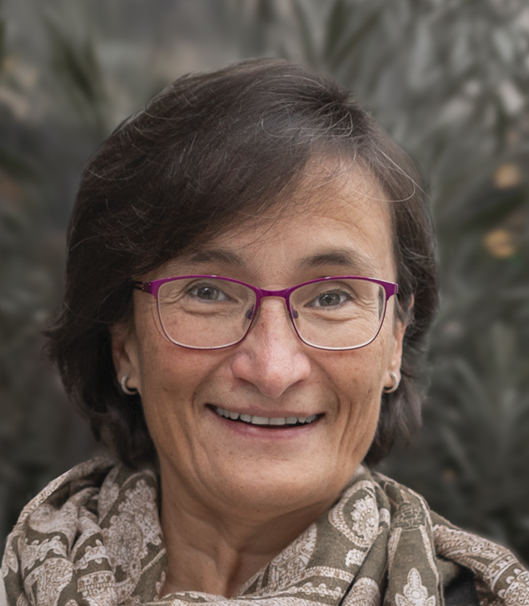
Prof. Virginia Dignum
Course title: Responsibility in a Changing World
Abstract
Artificial Intelligence is changing how we work, study, and connect. However, conversations about AI are too often driven by hype or fear. Generative AI and large language models raise urgent questions: What really is AI? Who decides how it develops? And how should we balance innovation with societal responsibility?
This talk challenges the view of AI as an unstoppable force and instead frames it as the outcome of human choices, shaped by values and priorities. Responsibility in AI is not a limitation but the key to creating systems that foster trust, fairness, and long-term progress. Far from slowing innovation, ethical design, governance, and regulation are what make sustainable innovation possible. By addressing trade-offs openly and focusing on societal well-being, we can ensure that AI contributes to human flourishing, not just technological advancement.
Short bio
Virginia Dignum is Professor of Responsible Artificial Intelligence at Umeå University, Sweden, where she leads the AI Policy Lab. She is a leading voice in global AI policy, chairing the ACM Technology Policy Council , co-chairing the IEEE Global Initiative on the Ethics of Autonomous Systems, and advising the Wallenberg Foundations in Sweden. She is a member of expert groups at UNESCO, OECD, and was part of the EU’s High-Level Expert Group on AI, the UN’s High Level Advisory Body on AI, and World Economic Forum Global Future Council on Artificial Intelligence. She also founded ALLAI, the Dutch AI Alliance. As part of her work for UNESCO’s AI Ethics Experts Without Borders, she is advising governments around the world on the development and operationalization of their national AI strategies. Her forthcoming book, The AI Paradox, will be published by Princeton University Press in February 2026.
Prof. Theocharis Theocharides

Course title: Edge Intelligence – Time for the Edge to Grow Up!
Abstract
Edge AI, a term which describes inference and sometimes learning when deployed on severely resource-constrained devices, is rapidly transforming how and where machine learning and inference is executed. This lecture introduces the foundations of Edge Intelligence, focusing on how advances in low-power sensors, embedded processors, specialized AI accelerators, and mature off-the-shelf platforms have made on-device intelligence both practical and scalable, democratizing AI in a way. We will examine the hardware–software stack that facilitates Edge AI, including sensing modalities, microcontrollers, system-on-chip solutions, model optimization techniques, and deployment toolchains that enable inference under strict constraints of energy, memory, and latency.
Building on these fundamentals, the lecture will identify key challenges such as resource limitations, performance, robustness, energy efficiency, and privacy. We will also discuss their deployment potential in emerging applications such as autonomous systems, wearable computing, and critical infrastructure monitoring. The lecture will review representative approaches spanning model compression, efficient model/hardware architectures, event-driven processing, and collaborative edge–cloud intelligence.
Finally, the lecture will discuss forward-looking directions and design guidelines, including bio-inspired and neuromorphic computation, in-sensor and on-device learning and processing, and hardware–algorithm co-design. The overall goal is for the attendees to understand what makes Edge Intelligence feasible today, what limits it, and how the field may evolve as the edge matures into an independent agent with its own “decision” capabilities.
Short bio
Prof. Theocharis (Theo) Theocharides holds a Ph.D. in Computer Science and Engineering from the Pennsylvania State University. He is an Associate Professor and the Department Chair, at the Department of Electrical and Computer Engineering, at the University of Cyprus and the Director of Research of the KIOS Research and Innovation Centre of Excellence. His research is focused on embedded, mobile and adaptive systems, tinyML, embedded computer vision and pattern recognition architectures and models, and intelligent system-level monitoring and dynamic reconfiguration for performance, energy and reliability of Systems-on-Chip. He has authored/co-authored more than 220 papers and book chapters in internationally acclaimed books and peer-reviewed scientific journals and conferences. He is a senior member of the IEEE and the IEEE Computer Society, a member of the ACM, a member of the HiPEAC Network of Excellence. He is an Associate Editor for ACM’s Computing Surveys, ACM’s Transactions on Emerging Technologies for Computing Systems (JETC), IEEE Transactions on Computer Aided Design of Integrated Circuits and Systems (TCAD) and the IEEE Design and Test magazine. He also serves on several Steering/Organizational and Technical Program Committee boards of various IEEE/ACM Conferences, most recently being the Technical Programme Committee Chair of the 2025 edition of the Design, Automation and Test in Europe (DATE), the largest conference in Europe focusing on Electronic Design and Automation of Integrated Circuits and Embedded Systems. Together with his students, they have worked extensively and pioneered work on hardware acceleration for machine learning and computer vision applications, including object detection, pattern recognition and depth estimation from stereoscopic video, yielding real-time, high frame-rates and low-power, suitable for emerging embedded vision systems, mobile robotics, and cyber-physical systems. His present work focuses on leveraging bioinspired algorithms for the development of hardware-friendly neural inference and tinyML applications and distributed embedded computer vision applications. Further, along with his students, they work on vision-based robotic collaboration for various monitoring and visual information extraction algorithms, involving smart camera networks, robot swarms, and autonomous aerial (drones) and terrestrial robots. He was selected as an IEEE CEDA Distinguished Lecturer for the 2025-2026 period.