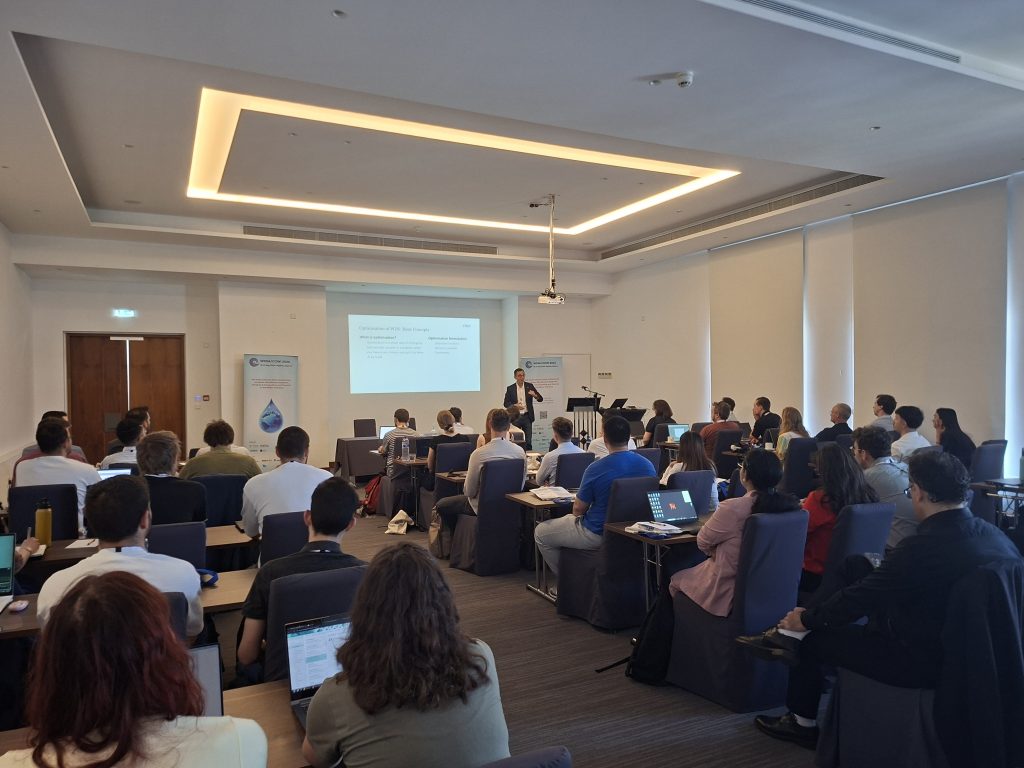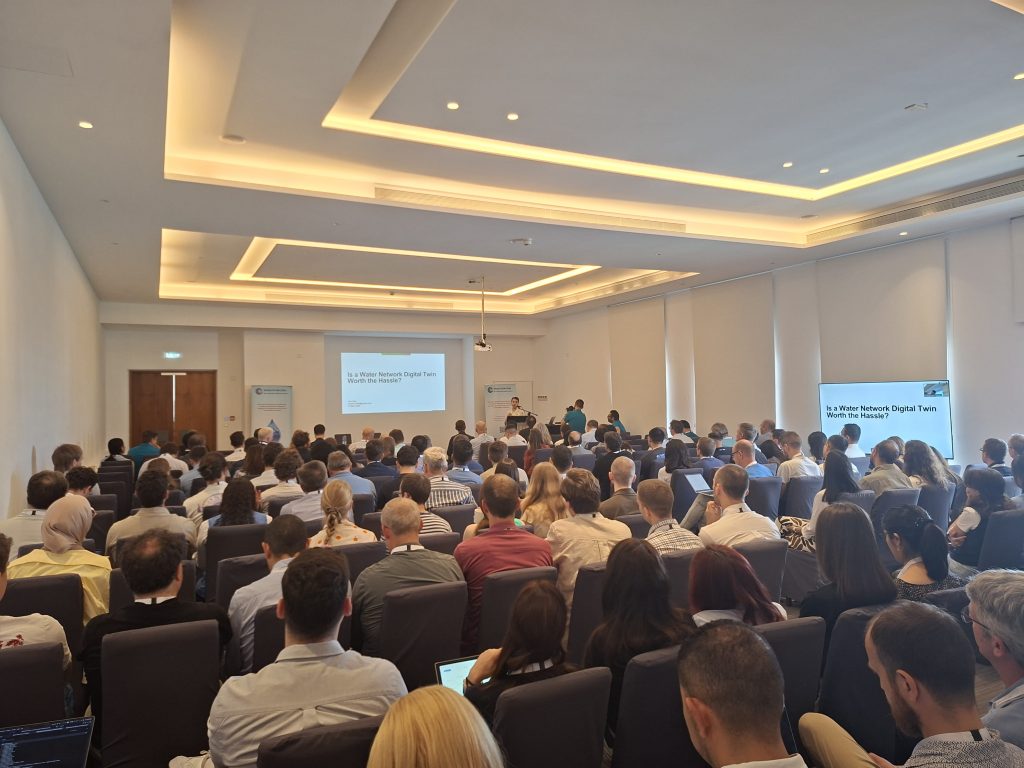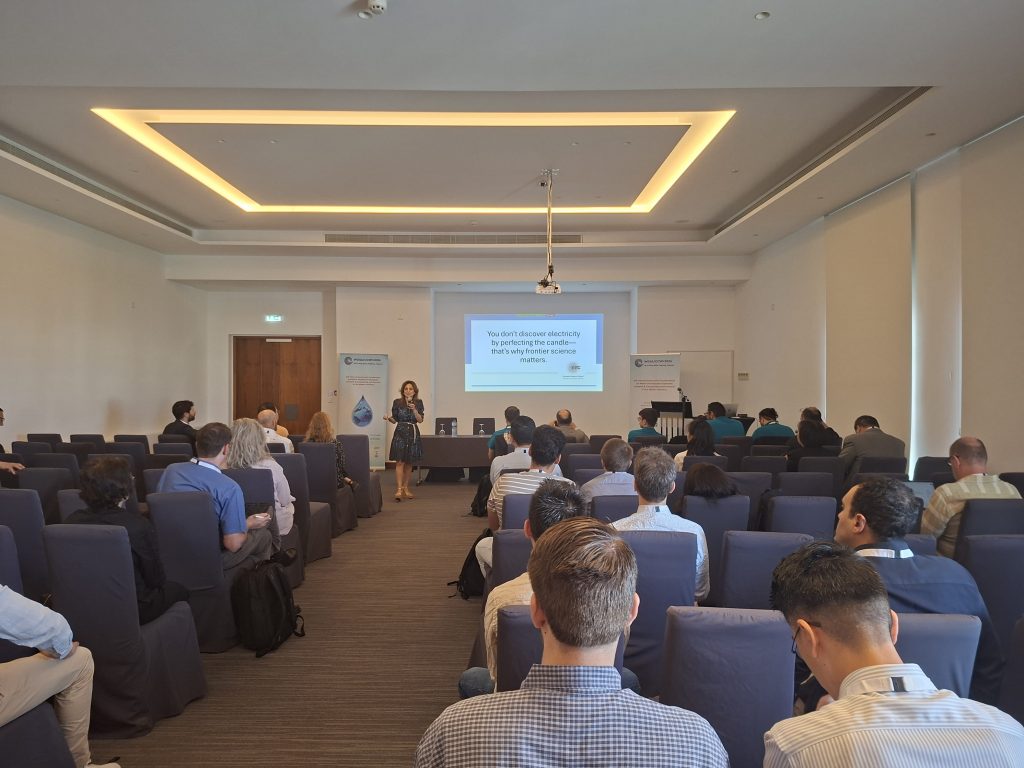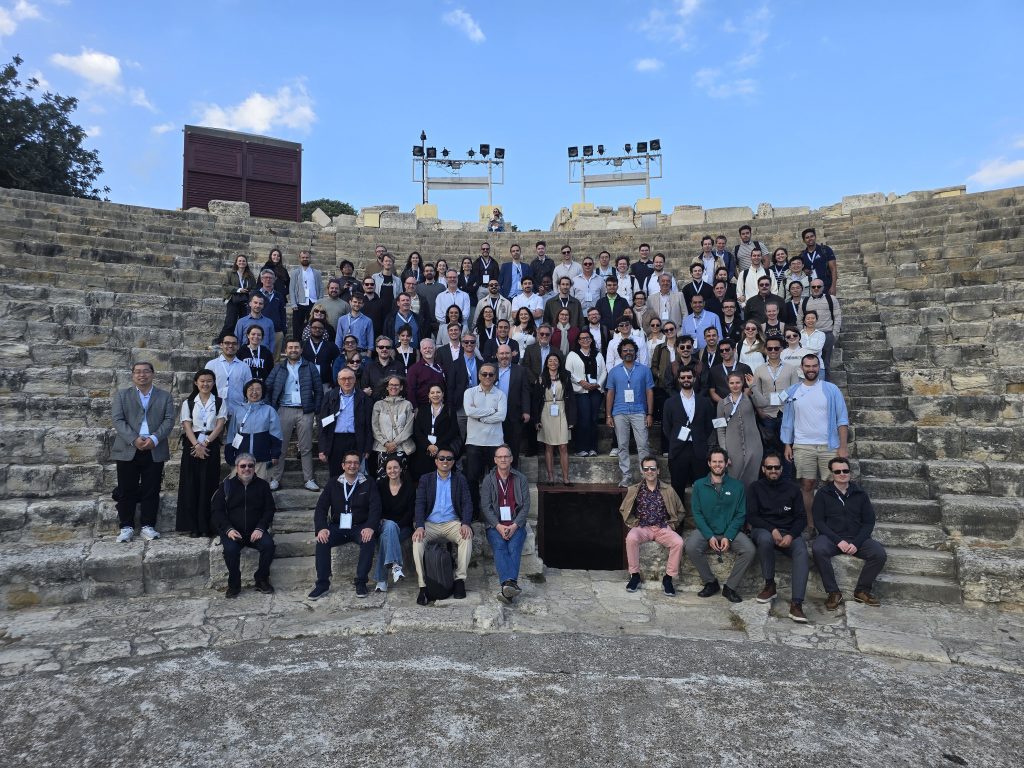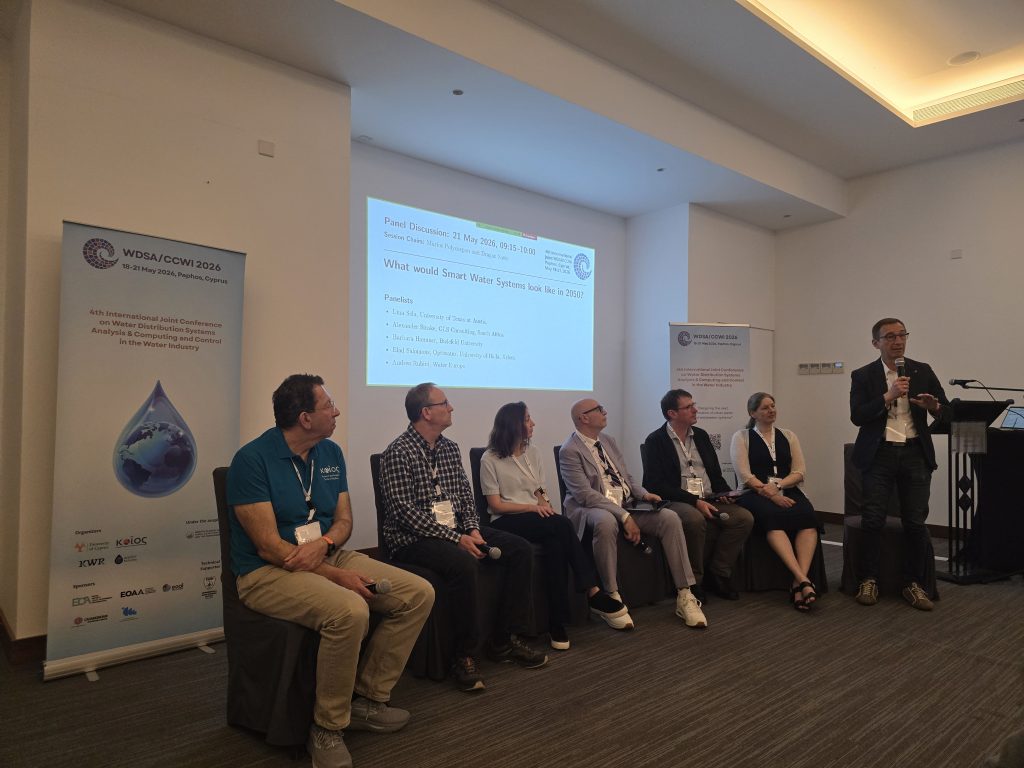
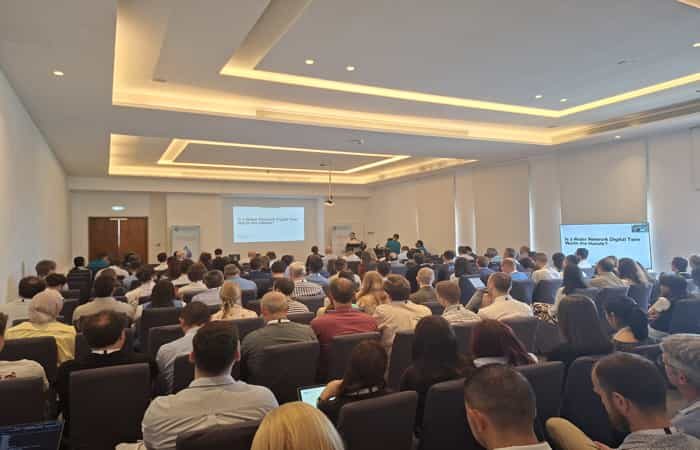
The 4th International Conference on Water Distribution Systems Analysis & Computing and Control in the Water Industry (WDSA/CCWI 2026), organized by the KIOS Research and Innovation Center of Excellence at the University of Cyprus within the framework of the ERC Synergy Grant Water Futures project, was a great success.
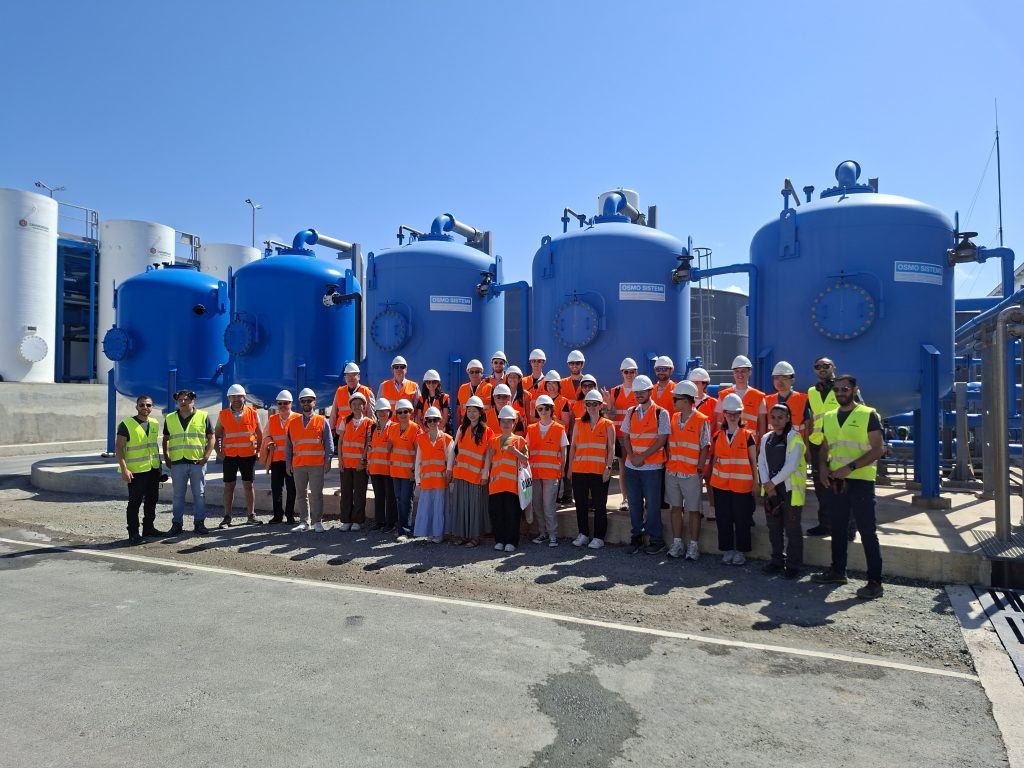
The conference took place in Paphos from 18 to 21 May 2026 and brought together 250 researchers, engineers, and representatives of water organizations from 30 countries. It was held under the auspices of the Cyprus Ministry of Agriculture, Rural Development and Environment and was supported by the District Local Government Organizations (DLGOs) of Paphos, Limassol, Larnaca, and Famagusta, as well as by Caramondani Desalination Plants.
Dr. Maria Panayiotou, Minister of Agriculture, Rural Development and Environment, delivered an address, emphasizing that the implementation of science-based solutions to address water scarcity and climate change requires close collaboration among the research community, water organizations, industry, and policymakers.
The conference focused on the design of future water systems under conditions of climatic, technological, and societal uncertainty. Key topics included digital twins and artificial intelligence, advanced technologies for leak detection and water quality monitoring, cybersecurity, the water-energy nexus, water reuse, and long-term infrastructure planning.
Hosting the conference in Cyprus was particularly significant, as the country relies on desalination for a large share of its drinking water supply, while water losses in distribution networks—reaching approximately 30%—remain one of the most pressing challenges facing the DLGOs.
The keynote speakers were Professor Barbara Hammer from Bielefeld University, Germany; Dr. Jim Uber from Xylem Inc., USA; Professor Phoebe Koundouri from the Athens University of Economics and Business, Greece; Professor Emily Berglund from North Carolina State University, USA; and Mr. Socrates Metaxas, Director General of the Limassol District Local Government Organization.
In his presentation, Dr. Jim Uber shared insights from his experience in developing digital twins and discussed the challenges facing the field. He noted that the future lies in integrating the physical characteristics of water systems into their simulation models. Similarly, Professor Barbara Hammer highlighted both the challenges and opportunities associated with using artificial intelligence as a substitute for traditional mathematical models in water systems, as well as the requirements introduced by emerging European AI regulations, including safety and explainability.
Professor Emily Berglund’s presentation offered a broader perspective by extending the discussion from the technical aspects of water networks to socio-economic considerations, with the aim of mathematically capturing consumer behavior. Professor Phoebe Koundouri emphasized that sustainable water management requires not only technological innovation but also the economic valuation of water resources, participatory planning, and stronger links between science, policy, and funding mechanisms.
Mr. Socrates Metaxas presented the digital transformation journey of the Limassol District Local Government Organization, providing valuable lessons directly relevant to the needs of the newly established DLGOs across Cyprus.
In parallel, researchers from the KIOS Research and Innovation Center of Excellence presented a new open-access database of leaks in water distribution networks, developed in collaboration with the Limassol District Local Government Organization. The database is intended to support the broader research community in developing and evaluating artificial intelligence algorithms for effective fault detection and diagnosis.
“Battle of the Water Futures” Competition
Running alongside the main Conference programme, and as part of the ERC Synergy Water Futures project, the “Battle of the Water Futures” competition challenged teams to develop and evaluate innovative solutions for the design and operation of future urban water supply systems under conditions of deep uncertainty. A central takeaway from the competition was that long-term infrastructure planning — spanning decades — cannot hinge on a single, static solution. Instead, it must embrace flexible, adaptive strategies capable of withstanding unforeseen future conditions.
A key conclusion of the conference was that digital twins, artificial intelligence, and smart control systems can substantially improve water management when supported by reliable data, robust cybersecurity measures, and transparent decision-making processes.
Finally, one of the questions raised during the conference was how much autonomy society is willing to grant to artificial intelligence in managing a resource as vital as drinking water. The consensus that emerged from the discussions was that technology can be a powerful ally, but ultimate responsibility must remain with humans.